● Classified by piston movement mode: Piston type internal combustion engines can be divided into reciprocating piston type and rotary piston type. The former piston makes a reciprocating linear movement in the cylinder, and the latter piston makes a rotary movement in the cylinder. (The latter applies to rotary engines)
● According to the classification of the intake system: internal combustion engines can be divided into naturally aspirated (non-supercharged) engines and forced intake (supercharged) engines according to whether the intake system adopts supercharging. If the intake is close to the atmosphere, it is a non-supercharged internal combustion engine or a naturally aspirated internal combustion engine; if the intake pressure is increased by a supercharger and the intake density increases, it is a supercharged internal combustion engine. Supercharging can increase the power of the internal combustion engine.
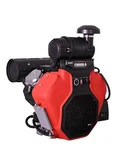
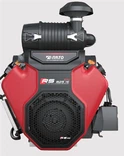
● Classification according to cylinder arrangement: internal combustion engines can be divided into single row, double row and three row according to different cylinder arrangements. Each cylinder of a single-row engine is arranged in a row, which is generally arranged vertically, but in order to reduce the height, the cylinders are sometimes arranged inclined or even horizontal. A dual-row engine arranges the cylinders into two rows, and the angle between the two rows is less than 180° (generally 90°), which is called a V-type engine. If the angle between the two rows is 180°, it is called an opposed engine. The three-row type arranges the cylinders in three rows to become a W-type engine.
● Classification according to the number of cylinders: Internal combustion engines can be divided into single-cylinder engines and multi-cylinder engines according to the number of cylinders. An engine with only one cylinder is called a single-cylinder engine; an engine with more than two cylinders is called a multi-cylinder engine. For example, two-cylinder, three-cylinder, four-cylinder, five-cylinder, six-cylinder, eight-cylinder, twelve-cylinder, sixteen-cylinder, etc. are all multi-cylinder engines. Modern vehicle engines mostly use three-cylinder, four-cylinder, six-cylinder, and eight-cylinder engines.
● According to the classification of cooling methods: internal combustion engines can be divided into water-cooled engines and air-cooled engines according to different cooling methods. The water-cooled engine uses the coolant circulating in the cylinder block and cylinder head cooling water jacket as the cooling medium for cooling; while the air-cooled engine uses the air flowing between the cylinder block and the outer surface fins of the cylinder head as the cooling medium Cooled. The water-cooled engine has uniform cooling, reliable operation and good cooling effect, and is widely used in modern vehicle engines.
● Classification according to stroke: Internal combustion engines can be divided into four-stroke internal combustion engines and two-stroke internal combustion engines according to the number of strokes required to complete a working cycle. Turn the crankshaft two revolutions (720°) and the piston reciprocates up and down in the cylinder for four strokes. The internal combustion engine that completes a working cycle is called a four-stroke internal combustion engine; while the crankshaft rotates one revolution (360°), the piston reciprocates up and down in the cylinder An internal combustion engine that moves two strokes and completes a working cycle is called a two-stroke internal combustion engine. Four-stroke internal combustion engines are widely used in automobile engines.